Essential Home Health Tools
Introduction: Taking an Active Role in Your Health at Home
In an era where healthcare is increasingly personalized and preventative, waiting for an annual physical to get basic health metrics feels reactive and insufficient. You want to be proactive, tracking trends and catching potential issues early, but the market is flooded with gadgets making bold claims. How do you know which tools are accurate, reliable, and actually useful for managing your well-being outside the clinic? The wrong device can lead to unnecessary anxiety or, worse, false reassurance.
This guide curates a selection of North American healthcare products—specifically, essential home health monitoring tools—that are backed by clinical evidence, recommended by medical professionals, and designed for safe, effective use by consumers. You will learn about the purpose, evidence base, and proper use of key devices like blood pressure monitors, thermometers, and pulse oximeters, as well as how to integrate their data into a meaningful conversation with your healthcare provider. Empowering yourself with the right tools transforms you from a passive patient into an informed partner in your health.
The Foundational Tools: Accuracy and Clinical Relevance
These devices measure vital signs that are critical indicators of overall health and are widely used in clinical practice.
1. Automated Upper-Arm Blood Pressure Monitor
Hypertension is a leading risk factor for heart disease and stroke, often asymptomatic. Home monitoring is crucial for diagnosis and management.
- Evidence & Standards: The American Heart Association (AHA) strongly recommends home blood pressure monitoring (HBPM) as it provides more data points and can identify "white coat" or "masked" hypertension. Devices should be validated by independent bodies like the Association for the Advancement of Medical Instrumentation (AAMI) or the British Hypertension Society (BHS).
- What to Look For: An automatic, oscillometric device with an upper-arm cuff that fits correctly (cuff bladder encircling 80% of arm circumference). Brands like Omron and Microlife often have validated models. Avoid wrist and finger monitors for primary use, as they are less accurate.
- Proper Use: Sit quietly for 5 minutes, back supported, feet flat, arm at heart level. Take two readings, 1 minute apart, in the morning and evening. Record all readings.
2. Digital Thermometer
Essential for monitoring fever, a key symptom of infection.
- Evidence & Standards: Digital oral, rectal, or tympanic (ear) thermometers are considered accurate for home use when used according to instructions. Temporal artery (forehead) thermometers can be reliable but require precise technique. The CDC provides guidance on proper measurement.
- What to Look For: A simple, easy-to-read digital thermometer. For infants, a rectal thermometer is considered the gold standard at home. For the latest on seasonal safety, see the CDC Newsroom updates.
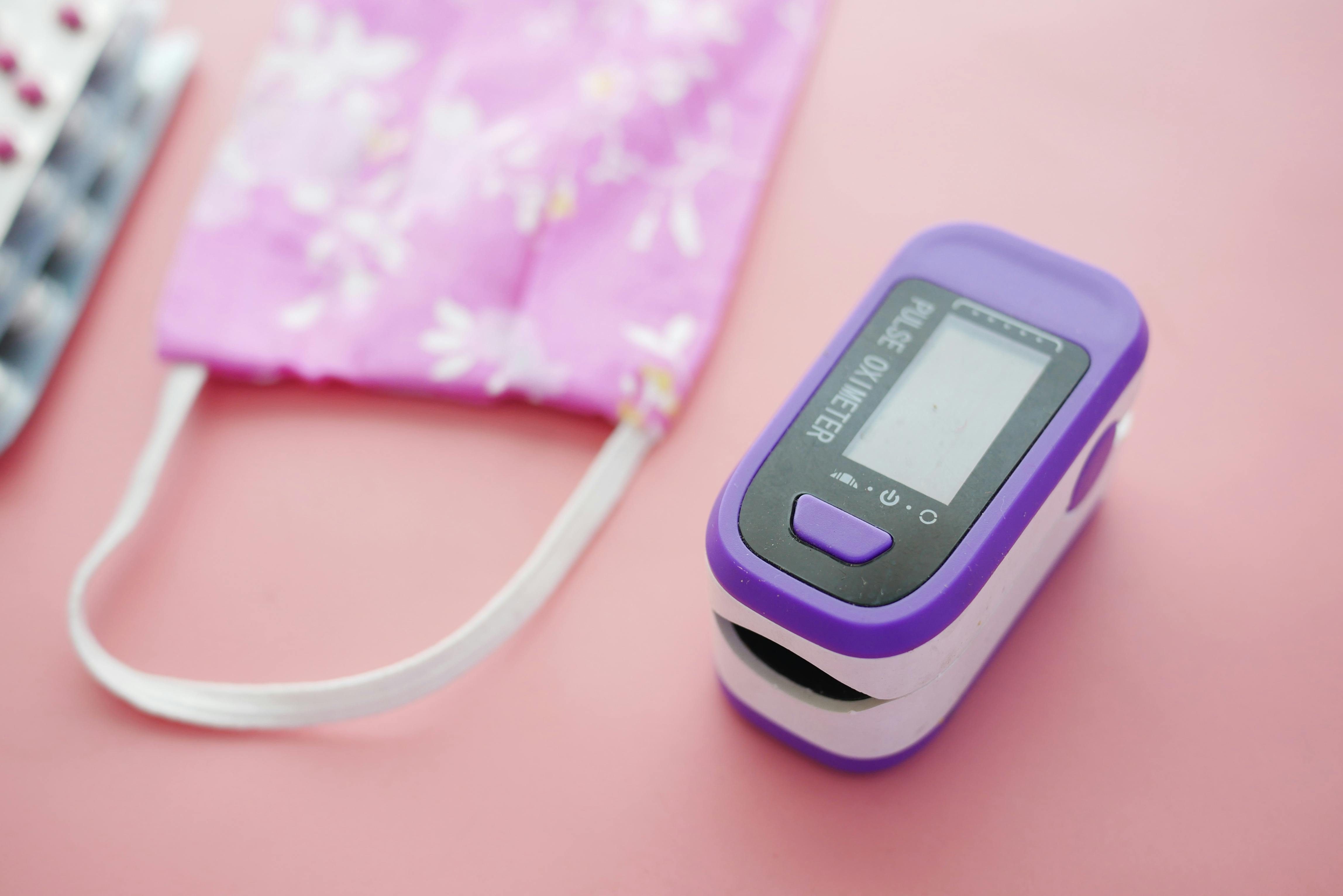
3. Pulse Oximeter & Wearables
Measures blood oxygen saturation (SpO2) and pulse rate. Useful for monitoring respiratory conditions, while modern wearables like the best fitness trackers of 2025 offer continuous monitoring.
- Evidence & Context: While useful, the FDA issued a safety communication in 2023 noting that over-the-counter oximeters have limitations and can be less accurate in people with darker skin pigmentation, nail polish, or poor circulation. They are trend devices, not diagnostic tools.
- What to Look For: An FDA-cleared device (check the label). Ensure it displays a steady pulse waveform or confidence indicator for more reliable readings.
- Proper Use: Place on a clean, warm finger without nail polish. Rest hand still. Normal SpO2 is typically 95-100%. Consistently low readings (below 92-94%) warrant a call to your doctor.
For guidance on tracking and interpreting readings, see our article on Creating a Personal Health Journal.
Specialized Tools for Targeted Monitoring
For individuals with specific health conditions or goals, these devices can provide valuable data.
4. Blood Glucose Monitor (Glucometer)
Critical for managing diabetes or prediabetes under medical guidance.
- Evidence & Standards: Home glucose monitoring is a standard of care in diabetes management, proven to improve glycemic control. Devices must meet ISO accuracy standards.
- Important Note: This tool should only be used under the direction of a healthcare provider who can recommend testing frequency, target ranges, and interpret the patterns.
5. Digital Scale (with Body Composition Analysis)
Tracking weight is important for heart health, fluid balance, and managing conditions like heart failure. Advanced scales estimate body fat percentage via bioelectrical impedance analysis (BIA).
- Evidence & Context: While BIA scales are not as accurate as DEXA scans in a lab, they can provide a reasonable trend for body composition changes over time when used consistently (same time of day, hydration level). The primary value is in tracking direction, not the absolute number.
Navigating the Market: Validation, Regulation, and Data Privacy
Not all "health" products are created equal. Use this framework to evaluate.
Check for Validation and FDA Clearance
- FDA Clearance/Approval: For medical devices (like blood pressure monitors, pulse oximeters, glucometers), FDA clearance indicates the device has been reviewed for safety and effectiveness. Look for this on packaging or websites.
- Clinical Validation: Seek out devices that publish their validation study results against a gold standard (e.g., a mercury sphygmomanometer for BP).
Understand Data Integration and Privacy
Many devices sync with apps. Before purchasing, check:
- Can the data be easily exported or shared with your doctor (e.g., as a PDF or via Apple Health/Google Fit)?
- What is the company's privacy policy? Is health data sold or used for marketing?
Creating an Effective Home Health Monitoring Routine
Project: Setting Up Your Home Health Station
- Consult Your Provider: Discuss which metrics are important for you to track based on your personal and family health history.
- Acquire Your Tools: Purchase the recommended devices, focusing on validated models.
- Establish a Routine: Designate a specific time and place for measurements (e.g., morning BP at the kitchen table). Consistency is key for spotting trends.
- Record Systematically: Use a dedicated notebook, a simple spreadsheet, or a secure app to log readings with date and time. Note any relevant context (e.g., "after medication," "feeling stressed").
- Review with Your Doctor: Bring your logs to appointments. This objective data is far more useful than saying "my blood pressure has been a bit high."
Frequently Asked Questions (FAQ)
Q: Are smartwatches (like Apple Watch or Fitbit) reliable health tools?
A> They are excellent for tracking trends in heart rate, physical activity, and sleep patterns. Some features, like the ECG app on certain models, are FDA-cleared for detecting atrial fibrillation. However, they are not replacements for medical-grade diagnostic devices. Use them for wellness insights, not diagnosis.
Q: How often should I calibrate or check the accuracy of my home devices?
A> Bring your blood pressure monitor to your doctor's appointment once a year to compare readings against their calibrated device. Check manufacturer guidelines for glucometer calibration with control solution. Thermometers and scales can be checked against known standards periodically.
Q: Can home monitoring make my health anxiety worse?
A> It can, if done obsessively or without proper context. The goal is to collect data over time to see trends, not to fixate on every single fluctuation. If you find yourself checking constantly or becoming distressed, take a step back and discuss a sustainable monitoring plan with your doctor or therapist.
Q: Will my insurance cover any of these home health tools?
A> Some insurance plans, particularly Medicare Advantage or plans for those with specific diagnoses like diabetes, may cover blood pressure monitors, glucometers, or even scales with a doctor's prescription. Check with your insurance provider.
Disclaimer: The home health tools discussed are for personal wellness tracking and monitoring under the guidance of a healthcare professional. They are not intended for self-diagnosis or to replace professional medical evaluation, diagnosis, or treatment. Always seek the advice of your physician with any questions regarding a medical condition.
Conclusion: Knowledge Through Measurement, Wisdom Through Context
Equipping your home with a few key, evidence-based North American healthcare products for monitoring is a powerful step toward proactive health management. By selecting validated devices like an upper-arm blood pressure monitor, a reliable thermometer, and a pulse oximeter, and by using them consistently to gather data, you create a valuable personal health record. This information, when shared with your healthcare provider, facilitates more personalized, data-informed conversations and decisions. Remember, the tool is only as good as how you use it—measure with purpose, track for trends, and always interpret the numbers within the broader context of your overall well-being and professional medical advice.
Related Recommended Articles

How to Reduce Screen Time: Build Healthier Habits
The average American adult spends more than 7 hours per day looking at screens — and that figure does not include occupational screen time at work. Research linking excessive recreational screen time to disrupted sleep,
Read More →
Lower Back Pain Relief at Home: What Works
Lower back pain is the leading cause of disability worldwide, affecting approximately 80% of adults at some point in their lives. It is also one of the conditions most frequently managed suboptimally — either through exc
Read More →
Alcohol and Health: What the Evidence Shows
For decades, moderate alcohol consumption was comfortably positioned in public health messaging as potentially beneficial — the "glass of red wine a day" narrative was widely circulated and widely believed. The research
Read More →