First Aid Kit Checklist for Home and Car
Affiliate disclosure: As an Amazon Associate I earn from qualifying purchases. MedHelperPro may earn a commission from eligible purchases made through links in this guide, at no extra cost to you. Affiliate availability does not affect our selections. Read the full disclosure.
Research note: Product selections are based on published specifications, policies, and independent evidence unless a guide explicitly describes hands-on testing.
Relevant shopping options: Compare the item list, case layout, expiration dates, and refill availability instead of relying on the advertised piece count.
At a glance
- Keep separate, easy-to-find kits at home and in the car.
- Use a recognized supply checklist, then adapt it to the household.
- Check dates and replace used or damaged items on a regular schedule.
A prepacked first aid kit can be a useful start, but the contents may not match your household or car. Check the item list, remove anything expired or damaged, and add supplies that fit the people who will use the kit.
Start with a core supply list
A home kit is for basic care while you decide what to do next. It is not a substitute for emergency help or first aid training. The American Red Cross checklist is a sensible starting point because it covers wound supplies, basic tools, and emergency information.
Bandages and wound supplies
- Adhesive bandages in several useful sizes
- Sterile gauze pads and one roll of gauze
- Medical tape that can be torn or cut easily
- Individually packed antiseptic wipes
- Two or more pairs of latex-free disposable gloves
- An instant cold pack and an elastic wrap
Do not be impressed by a kit that advertises 200 pieces if most of them are tiny bandages. Look at the number of gauze pads, gloves, tape rolls, and cold packs. Those items often show whether the kit was built for actual use or a large number on the box.
Simple tools
- Blunt-tip medical scissors
- Fine-tip tweezers
- A digital thermometer that suits the people in the home
- A small flashlight with spare batteries
- A CPR face shield if someone in the home is trained to use it
- A printed emergency contact card
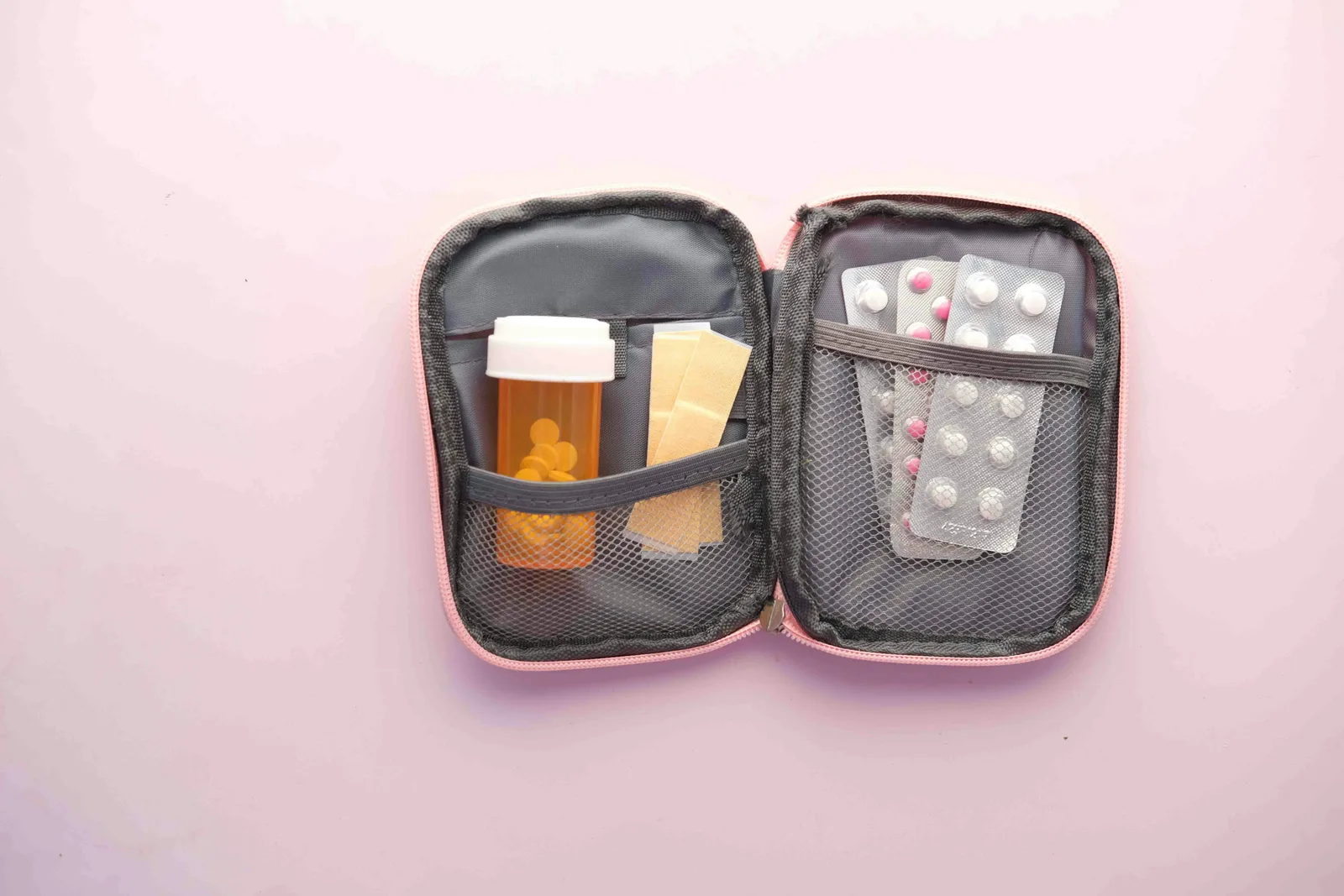
Tools should have their own pocket or tray. You should not need to empty the whole bag to find the gloves or scissors. A case with clear pouches is easier to check than a deep box with one large compartment.
Prepacked kit or build your own?
| Approach | Best for | Main tradeoff |
|---|---|---|
| Prepacked kit | A fast, affordable starting point | May include filler items or too few gloves and gauze pads |
| Build your own | Homes with a clear supply list and storage case | Costs more time and may cost more up front |
| Hybrid kit | Most households | You still need to inspect and restock the base kit |
For most people, the hybrid approach is easiest. Buy a well-organized base kit, compare it with the Red Cross list, and add the few items that are missing. Keep the receipt until you have checked the seals, dates, case quality, and item count.
What belongs in a car kit?
A car kit should be small enough to stay in the vehicle and sturdy enough to survive being moved around. Start with bandages, gauze, tape, gloves, scissors, an elastic wrap, a cold pack, a blanket, and a contact card. Add a flashlight and reflective safety gear to the car's wider emergency supply bag.
Cars can become very hot or cold. That makes them a poor long-term storage place for many medicines, batteries, liquids, and devices. Check each label before leaving an item in the car. Review the kit after a season of extreme weather, not only when something has been used.
Add only what your household will use
A larger kit is not always a better kit. A hiking family may want blister pads and a tick tool. A home with young children may want smaller bandages and a thermometer designed for that age group. Someone with a known allergy may have a prescribed device that must be stored and checked exactly as directed.
Keep prescription medicines in their labeled containers and follow their storage directions. A shared first aid case is not automatically the right place for them. A printed list of medicines, allergies, and emergency contacts can be useful, but store personal details where visitors cannot casually read them.
How to judge a kit before buying
- Readable contents list: The seller should show exact quantities, not only a total piece count.
- Useful case: Choose clear sections, reliable zippers, and enough room for a few added items.
- Sealed supplies: Individual wrapping helps you spot opened or damaged items.
- Restock options: Standard sizes are easier to replace than unusual proprietary refills.
- Portable weight: The car kit should be easy to carry away from the vehicle.
A wall-mounted cabinet can work well at home, but only if it is easy for the household to reach. A bright soft case is often better for a car because it is easier to see in a dark trunk. The best format is the one people can find quickly.
Set a simple restock routine
Write the next check date on a card inside the lid. Twice a year is an easy baseline, but also inspect the kit after each use. Replace opened packs, damaged seals, dead batteries, and anything past the date printed by the maker.
Keep a short restock list in the case. When someone uses an item, they can write it down instead of hoping they remember later. This small habit matters more than buying an oversized kit and forgetting about it.
Can I use a commercial first aid kit as it comes?
Use it as a starting point. Open the case, count the useful supplies, check the dates, and compare the contents with a trusted checklist. Add missing items before putting the kit away.
Where should the home kit be stored?
Choose a cool, dry place that responsible household members can reach. Avoid a locked location that delays access. Make sure everyone knows the spot, and keep the route to it clear.
Should medicines go in the same case?
Only when the product label and a qualified professional's advice support that storage plan. Heat, moisture, light, and access by children can all matter. Our home health kit guide explains how to separate first aid supplies, devices, and medicines.
A useful kit is easy to find, easy to carry, and easy to restock. Buy for the supplies inside the case, not the piece count printed on the front.
Build two inventories, not one oversized kit
A home kit and a car kit face different conditions. At home, you can use a larger case, keep instructions nearby, and store extra sealed supplies. In a car, space is limited and temperatures can exceed the storage range printed on many products. Start with the trusted checklist for each location, then remove items that cannot safely stay in that environment.
Keep the inventory on a card inside the lid. List the item, quantity, and earliest printed date. A clear inventory makes a small kit more useful than a crowded case with dozens of tiny pieces hidden under each other.
Check whether the piece count is meaningful
Commercial kits often advertise a large total by counting every small wipe, pin, and cotton swab. Open the contents list and count the supplies you would actually want to replace after use. Check bandage sizes, number of sterile dressings, glove pairs, tape length, and whether tools have their own compartments.
A good case leaves enough room to add personal items from an appropriate professional plan. It should open flat or provide clearly labeled sections. Avoid cases packed so tightly that the contents must be emptied to reach a dressing.
Protect the supplies from the location
| Location | Main risk | Useful check |
|---|---|---|
| Bathroom | Heat and moisture | Move the kit to a cool, dry cabinet nearby |
| Kitchen | Steam, spills, and child access | Use a visible but controlled storage point |
| Car | Temperature extremes | Follow every label and rotate affected items |
| Workshop | Dust and damaged packaging | Use a closed case and inspect seals |
Make restocking easy to repeat
Buy common consumables in sizes that fit the case, but do not break sterile packaging to save space. Keep a small reserve at home and write the reorder source on the inventory card. After any use, place the empty wrapper or a note in a designated pocket until the item is replaced.
Review the kit when household needs change, when a vehicle is used for a long trip, or when supplies have been exposed to heat, water, or damage. Training and emergency instructions matter too. A well-stocked case is not a substitute for knowing how to contact emergency services and follow current first-aid guidance.
Put a small flashlight beside the kit if the storage area can be dark, and make sure the case can be opened with one hand. Tell every responsible household member where it is kept. A clear label on the outside is more useful than a decorative case that blends into a crowded shelf.
Sources and further reading
Before you buy or use a product: Confirm current specs, prices, fit, warranty, and return terms on the seller's site. Product needs vary by body, home setup, budget, and comfort preferences.