Home Health Kit: What to Keep on Hand
Affiliate disclosure: As an Amazon Associate I earn from qualifying purchases. MedHelperPro may earn a commission from eligible purchases made through links in this guide, at no extra cost to you. Affiliate availability does not affect our selections. Read the full disclosure.
Research note: Product selections are based on published specifications, policies, and independent evidence unless a guide explicitly describes hands-on testing.
Relevant shopping options: Buy only devices your household has a clear reason and instructions to use. Check validation, fit, consumables, and storage needs first.
At a glance
- Keep basic first aid supplies separate from monitoring tools and medicines.
- Add a device only when it matches a real household need.
- Store instructions, batteries, and expiration dates with the item.
A home health kit should make a few common tools and supplies easy to find. Start with basic first aid items, then add a thermometer or another monitoring device only when it suits a real household need and you know how to use it.
Give each item a clear job
Do not buy a device just because it appears on a generic checklist. A useful home kit is built around tasks your household already has. That might mean checking a fever, following a blood pressure plan, or keeping first aid supplies in one known place.
| Item | When it makes sense | What to check before buying |
|---|---|---|
| Digital thermometer | You need a basic way to check temperature at home | Age range, measurement site, cleaning steps, and replacement battery |
| Blood pressure monitor | A clinician has asked for home readings or you already follow a monitoring plan | Independent validation, upper-arm cuff, correct cuff range, and memory for multiple users |
| Pulse oximeter | A qualified professional has explained when and how your household should use one | Instructions, fit, display clarity, and the limits of home readings |
| Glucose meter | It is part of a personal care plan | Compatible strips, ongoing strip cost, expiry dates, and safe lancet disposal |
This approach saves money and keeps the kit understandable. One device with a clear purpose is more useful than four gadgets that nobody knows how to use.
Start with a thermometer
A digital thermometer is the most broadly useful measuring tool for many homes. Choose the type by age, comfort, and how the household will take a reading. Oral, ear, forehead, and no-contact models are not interchangeable, and each one has its own technique.
Before buying, read the manual online. Check the claimed age range, cleaning method, battery type, memory function, and whether the display can be read in low light. A fast reading is convenient, but clear placement instructions matter more. Our thermometer accuracy guide explains why technique and measurement site can change the result.
Add a blood pressure monitor only for a reason
If home blood pressure readings are part of a care plan, look for a validated upper-arm monitor. The cuff must fit the arm. A device can be well designed and still give poor results when the cuff is too small, too large, or placed incorrectly.
Use the ValidateBP device list to check models, then compare cuff range, storage, screen size, user profiles, and export options. The best choice is often a simple model with the right cuff, not the one with the most app features. See our blood pressure monitor buying guide and cuff size guide before ordering.
Be cautious with extra monitoring devices
A pulse oximeter or glucose meter is not a required purchase for every home. These devices make the most sense when a qualified professional has explained why you need one, how to use it, and what to do with the readings. Without that context, more numbers can create confusion instead of helping.
Think about ongoing supplies as well as the device price. Glucose test strips and lancets have repeat costs. Some devices use a phone app or online account. Check whether the product still works without the app, how data can be deleted, and whether another person in the home can read the display.
Keep first aid supplies in their own section
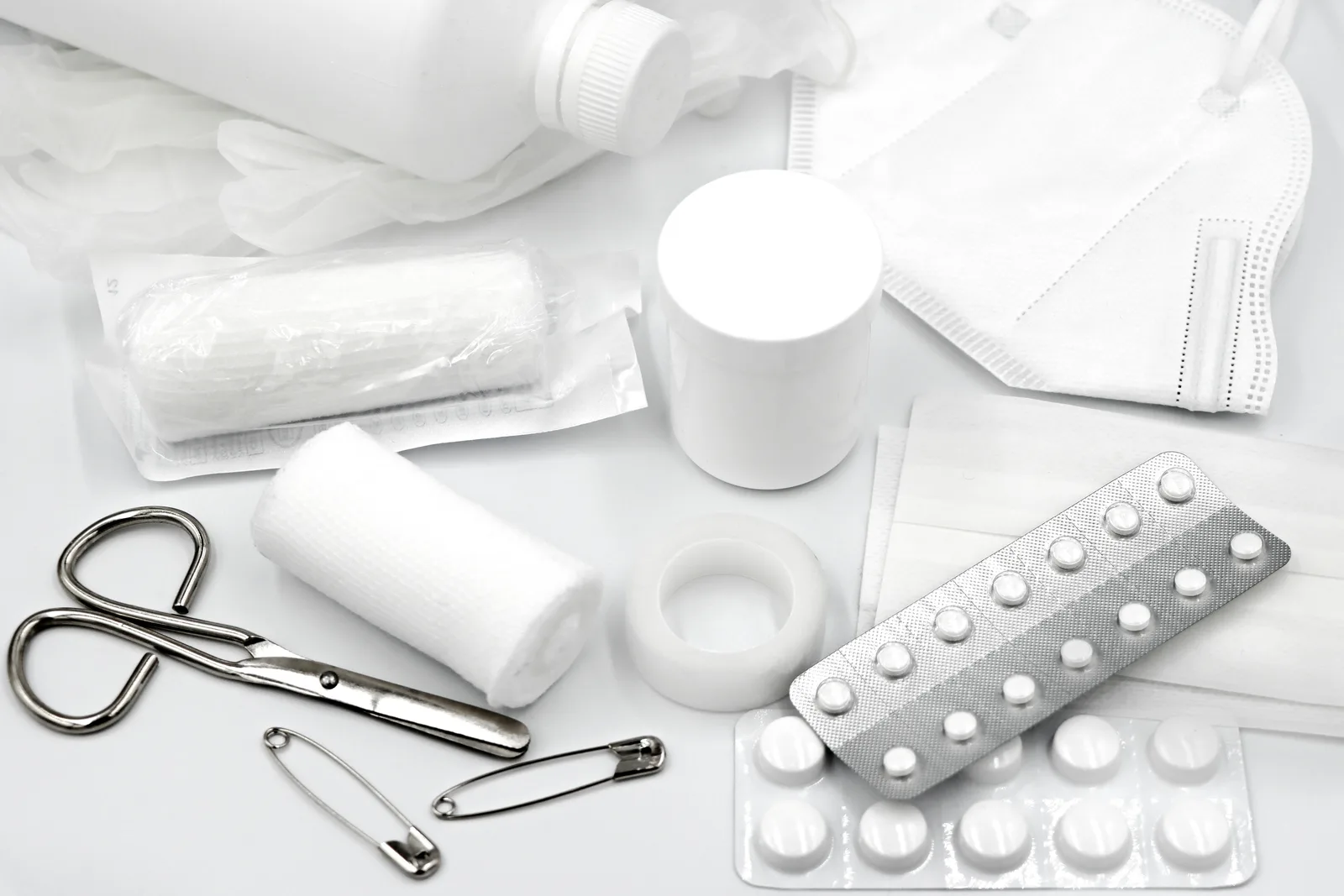
First aid items should be easy to reach without moving device boxes or medicine bottles. A separate zip case or clear tray works well. Start with assorted bandages, sterile gauze, medical tape, disposable gloves, scissors, tweezers, an elastic wrap, and a cold pack. Compare the final list with the American Red Cross kit checklist.
Our first aid kit buying guide covers prepacked kits, cases, and car supplies in more detail. Keeping the two categories separate makes restocking much easier.
Store medicines by their labels
Do not pour medicines into an unlabeled organizer and call it a home health kit. Keep each product in its original container unless a pharmacist or another qualified professional gives different directions. Follow the label for temperature, light, moisture, and child-safe storage.
A bathroom cabinet can be too damp for some products. A hot car is also a poor storage place for many medicines and devices. If you keep a medicine list for emergencies, include only the details that are useful and protect it from casual access.
Choose storage that makes checks easy
- Use sections: Keep first aid, devices, manuals, and spare batteries apart.
- Keep manuals nearby: A printed quick-start sheet is useful when an app is unavailable.
- Label open dates: Some strips and liquids have a shorter life after opening.
- Set a reminder: Check dates, seals, batteries, and missing items twice a year.
- Test access: Responsible household members should know where the kit is and how to open it.
Keep broader disaster supplies in a separate emergency bin. The Ready.gov checklist covers water, food, radios, lights, and other items that do not need to crowd the health kit.
Questions to ask before buying a device
- Who will use it, and can they read the screen and follow the steps?
- Has a trusted source or qualified professional recommended this type of device for that use?
- Does the size or cuff fit the intended user?
- What parts, strips, batteries, or subscriptions will need to be replaced?
- Can the device be returned after the box is opened?
- Where will the manual, charger, and results log be kept?
Those questions are more useful than comparing feature counts. They reveal whether the product will fit the routine, not just the shelf.
Where should I store the home health kit?
Choose a cool, dry place that is easy for responsible household members to reach. Keep it away from steam, direct sun, cleaning products, and young children. Follow each product's label when its storage needs are stricter.
How often should I check it?
Check it after use and set a full review twice a year. Replace missing supplies, test batteries, inspect seals, and look at every printed date. Also review the kit when a care plan or household member changes.
Should the car kit be the same?
No. A car kit should focus on compact first aid and roadside needs. Heat and cold can damage many products, so do not copy the home kit into the trunk without checking every label.
Start small. Buy a thermometer if it fills a real need, add another device only when there is a clear plan for it, and keep every instruction close to the product.
Assign every device a purpose and an owner
Write the intended user and reason for keeping each device on a simple inventory. This prevents a household from collecting meters, cuffs, and accessories that no longer match anyone's needs. Add the exact model, compatible consumables, battery type, storage limits, and the location of the manual.
If a device was recommended as part of a care plan, record who provided the instructions and how results are meant to be shared. Do not invent a testing schedule from the product's marketing material. The equipment purchase and the personal care decision are separate.
Check validation and consumables before checkout
For products where independent validation applies, search the exact model rather than the brand. Then check the recurring supplies. Test strips, probe covers, lancets, cuffs, batteries, and sensors can determine the real cost and useful life of the kit. Look at availability, package size, storage dates, and whether generic parts are actually approved for that model.
A device with inexpensive hardware can become costly when its consumables expire quickly or are sold only through one supplier. Estimate a year of realistic use before comparing prices.
Keep instructions with the product
- Store the printed manual or a clearly labeled official PDF link.
- Keep the model number visible without dismantling the device.
- Label chargers and adapters so they are not swapped.
- Use separate profiles when a device stores results for more than one person.
- Record the next battery, seal, and printed-date check.
Review the inventory twice a year and after any change in household needs. Remove products that no longer have a clear purpose, cannot be supported with compatible supplies, or have damaged packaging. A smaller, current kit is easier to trust than a crowded cabinet.
Sources and further reading
Before you buy or use a product: Confirm current specs, prices, fit, warranty, and return terms on the seller's site. Product needs vary by body, home setup, budget, and comfort preferences.